Ameen Akbar
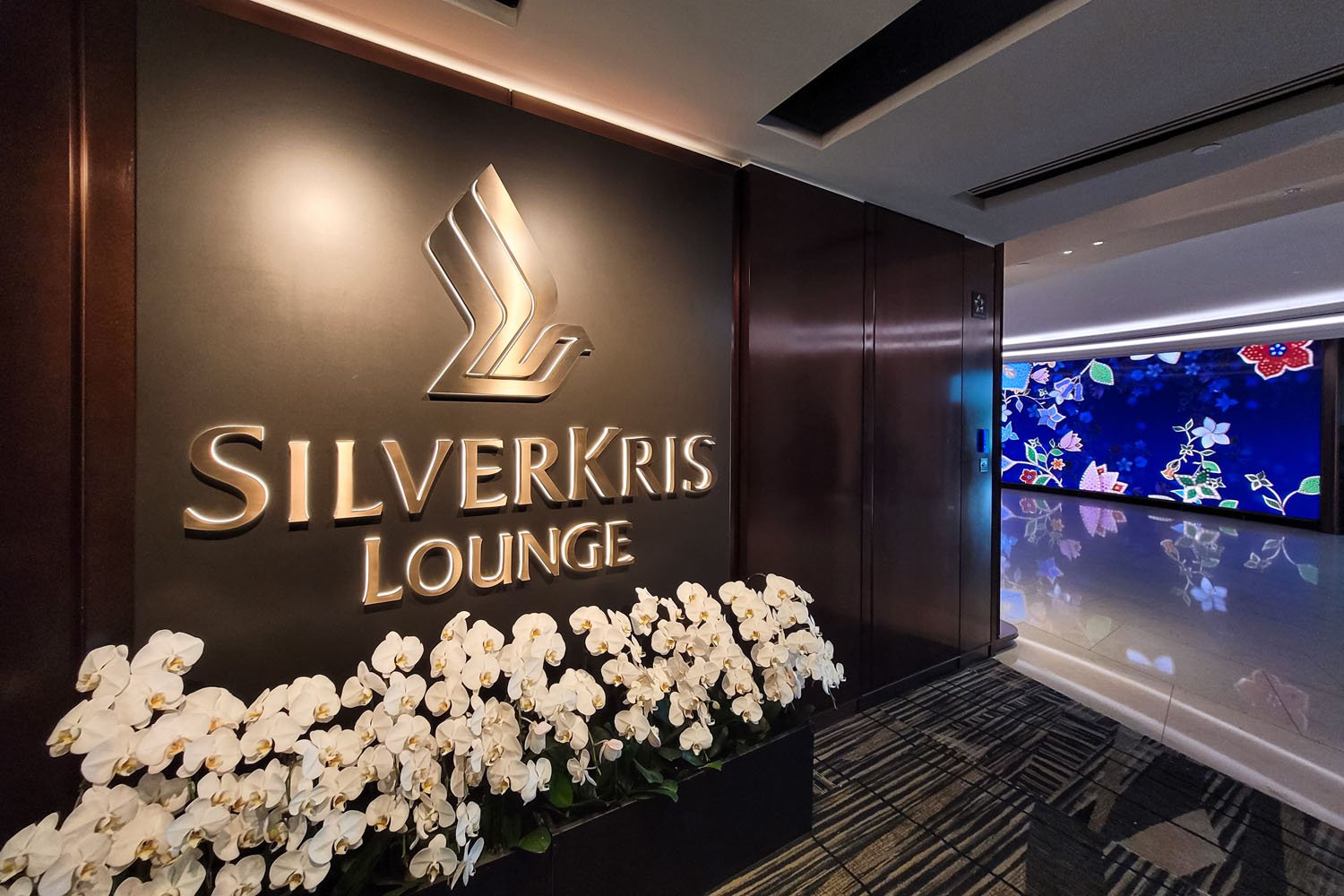
Entrance to the SilverKris Lounge First Class at Terminal 2
Case study — Singapore Airlines

Redesigning SilverKris Lounge dining for a contactless world

At 12 major airports, the SilverKris Lounge offered a buffet visitors could choose from freely. But when Covid-19 hit, that needed to evolve given safety precautions, while retaining the premium experience lounge visitors were used to.

Role
UX design, research
Led
Research through to prototyping
Team
1 PO, 2 devs, 2 SMEs, 2 interviewers
Client
Singapore Airlines, SilverKris Lounge
Timeline
Q2 2020, 3 months to MVP
Platform
Responsive web, mobile-first

When Covid-19 hit, the lounge's self-serve buffet posed two clear risks: visitors sharing common utensils and surfaces, and crowding around shared serving areas.

Our goal was to design a safer solution while retaining the premium experience lounge visitors were accustomed to. Lounge access was restricted for most of the project, so stakeholder discussions and journey mapping happened remotely.

Understanding the landscape

To understand the current setup at the lounge, I reached out to lounge staff and subject matter experts. Given the entry restrictions at the time, most of this was done virtually. I also looked at other F&B apps and websites, as well as restaurants that had started adopting digital menus.

Highlights from stakeholder discussions

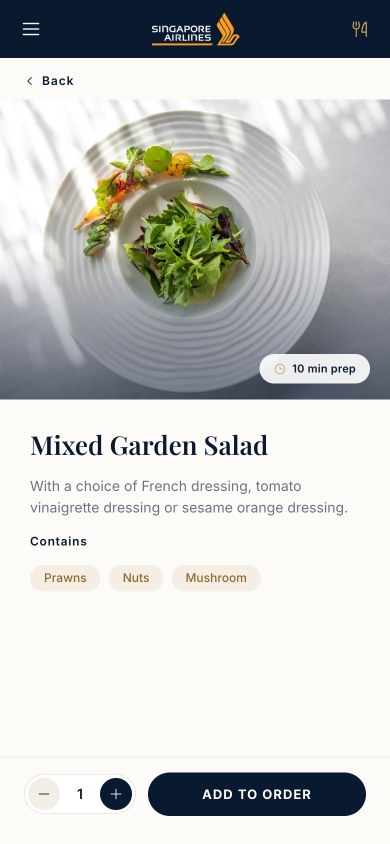
Dietary preferences as well as allergies are important to customers: this shaped both the allergen tags on the dish details screen and a preference-selection step in the ordering flow.
Customers wanted their dietary preferences remembered as it was already in their flight profile. That meant extra backend integration costs. With Covid's duration still unknown, it was hard to justify building for this need. Instead we used static allergen tags on the dish details screen.
Body-storming session in the SilverKris Lounge kitchen
⤢ Click to zoom
Mapping the order flow with kitchen staff: working through how orders would be received and prepared on site, to inform the order management system.
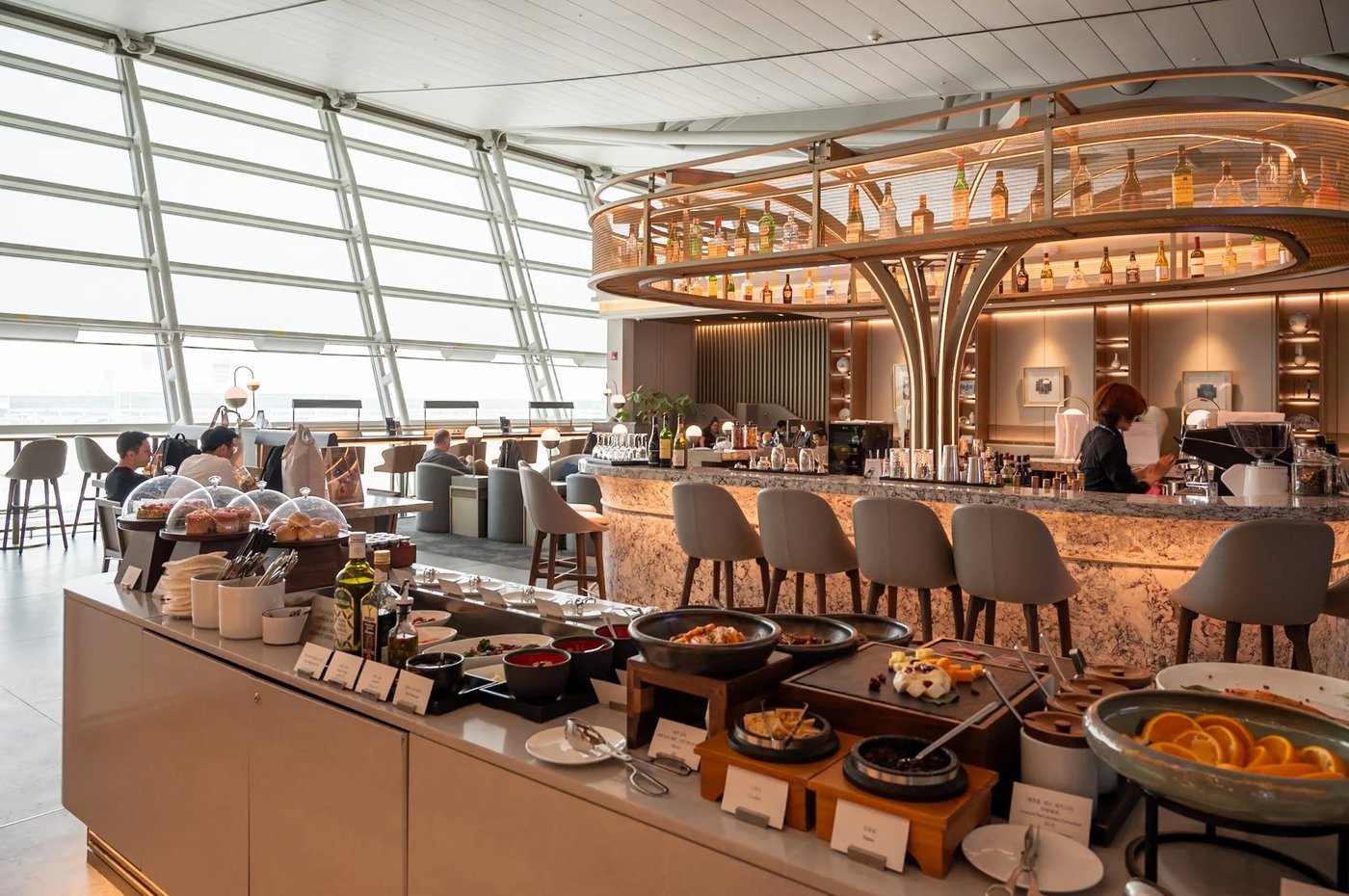
SilverKris Lounge bar and buffet counter
⤢ Click to zoom
The buffet being replaced: shared surfaces and utensils were flagged as a spread risk, a key part of the case for redesigning the experience.

From arrival to pickup

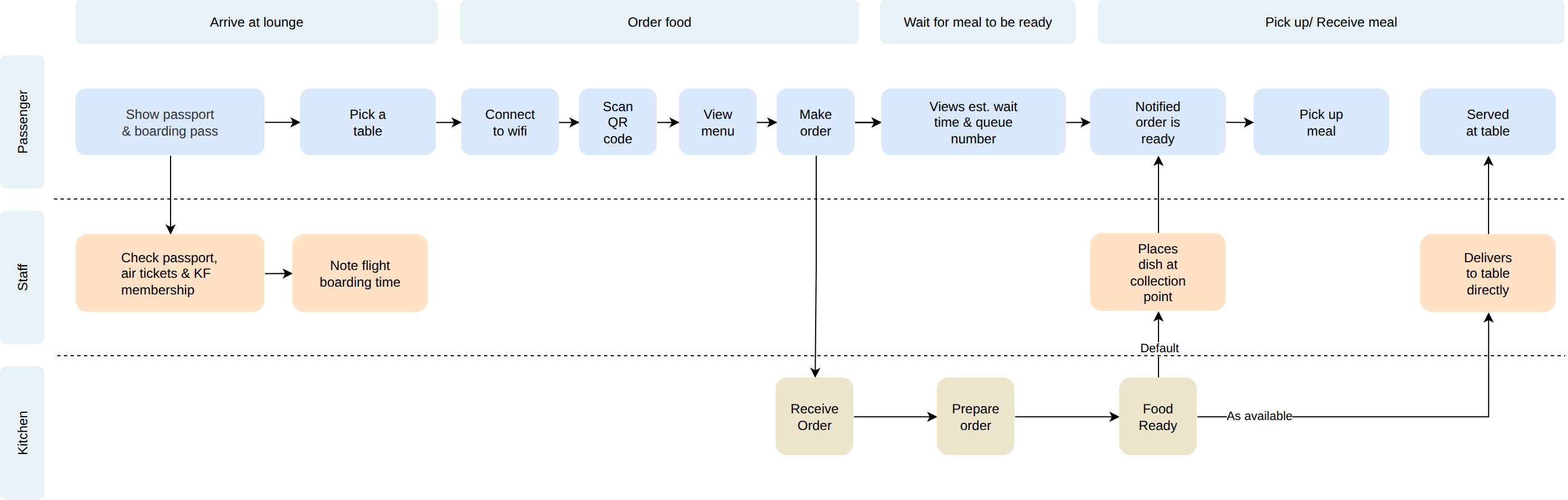
I ran a remote workshop with the team to map how visitors, lounge staff, and the kitchen would each experience the future solution, and where the dependencies between each actor lie. The one real branch point is at pickup: during Covid the lounge was quiet enough that self-collection was the default, though staff sometimes delivered to the table directly when they had the bandwidth. That flexibility was more about how things played out on the floor.

Service blueprint showing Passenger, Staff, and Kitchen lanes across the arrival, ordering, wait, and pickup stages of the SilverKris Lounge journey, including the self-collection vs. table-delivery branch.
⤢ Click to zoom

Highlights

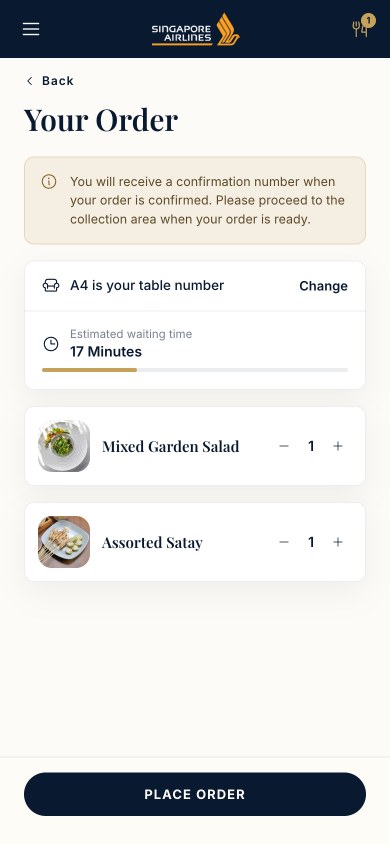
Knowing the preparation time would be important, so visitors can head to the gate on time.
Staff capture each visitor's departure time at check-in, so they can proactively flag it if a visitor is at risk of missing their flight.

Bringing the solution to life for stakeholders

Storyboards of the to-be solution were created to help stakeholders envision the experience.

Scenario

Rachel is on her way to Poland, she has a couple of hours before her flight. She would like to have a snack & finish reading a chapter in her book at the SilverKris Lounge.

From QR scan to meal pickup

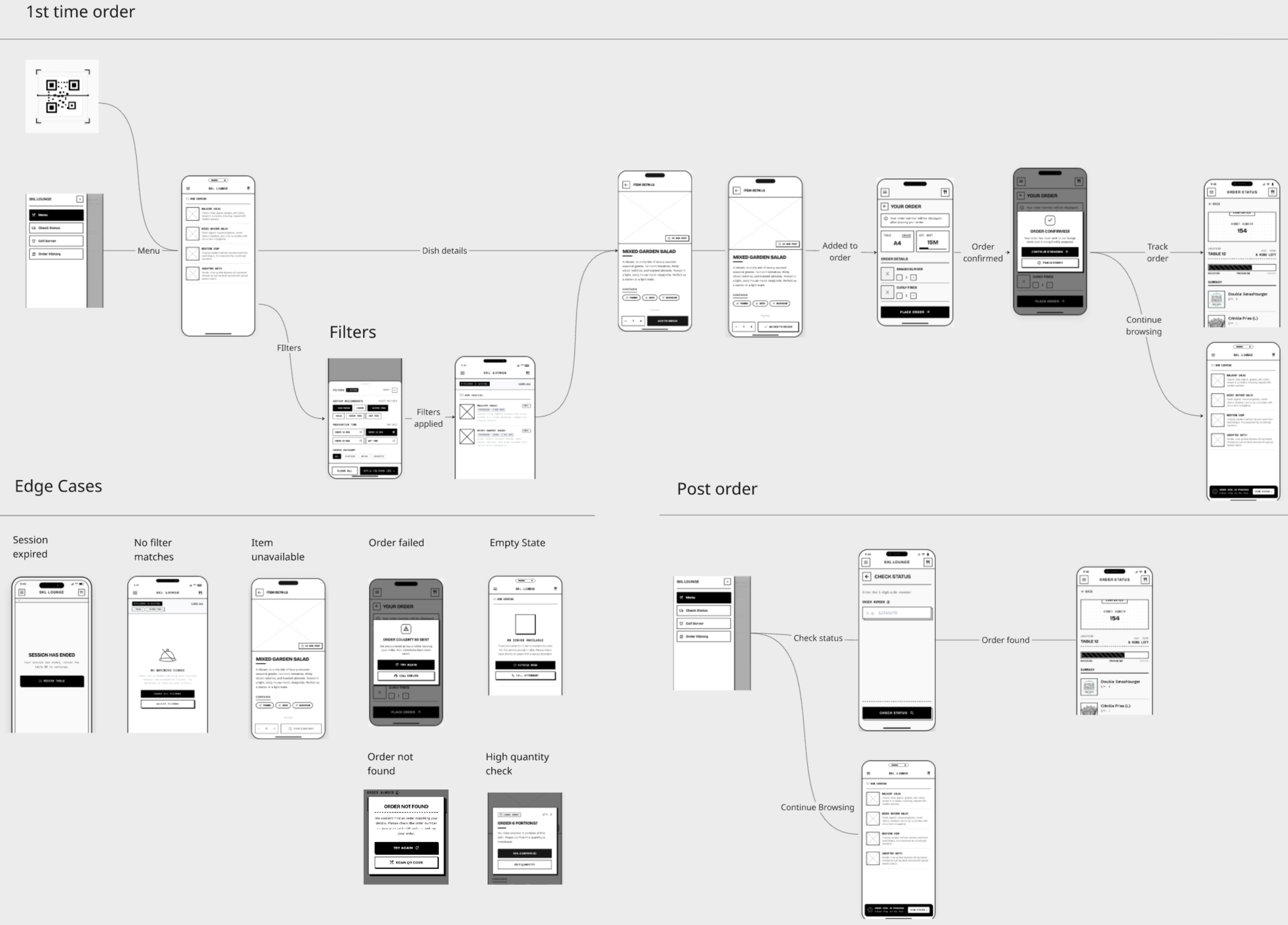
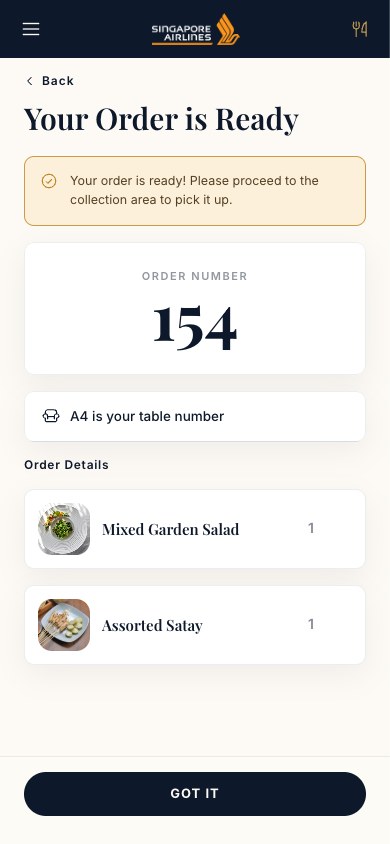
Wireflowing let us visualise the flow, from the moment the user scans the QR code to the point they have their dish, including the filter flow, edge cases, and checking order status afterward.

Wireflow diagram covering first-time ordering from QR scan through menu browsing, filters, dish details, order confirmation and tracking; seven edge-case screens (session expired, no filter matches, item unavailable, order failed, empty state, order not found, high quantity check); and the post-order check-status flow.
⤢ Click to zoom

Testing at the lounge, and beyond it

An interactive prototype was created to test on participants. They were given 2 tasks.

1. To select a meal from the menu and proceed to order it.
2. To check their order status assuming they had closed their browser.

Moderated — 8 participants

Guerrilla testing was done at the lounge by my colleagues, given entry restrictions at the time.

Unmoderated — 71 participants

Usability testing with Maze was conducted among employees who weren't involved in the project.

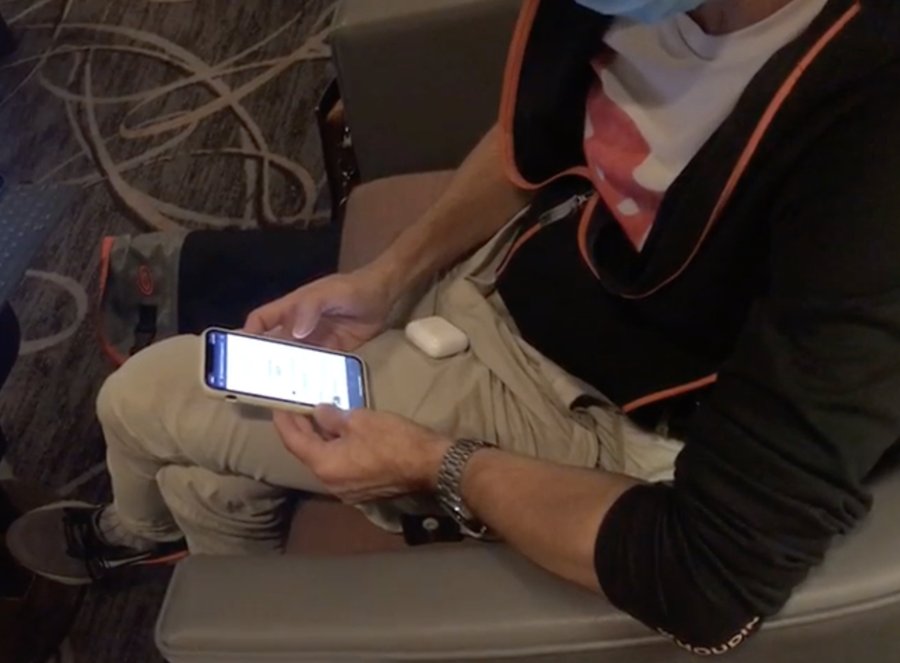
A participant using the prototype on a mobile phone during a moderated testing session
⤢ Click to zoom
Key insight from testing

Users lost track of their order after closing the browser during testing. We fixed this two ways.

  1. QR codes on tables capture the guest's table number at access, so staff can locate them directly when delivering the meal.
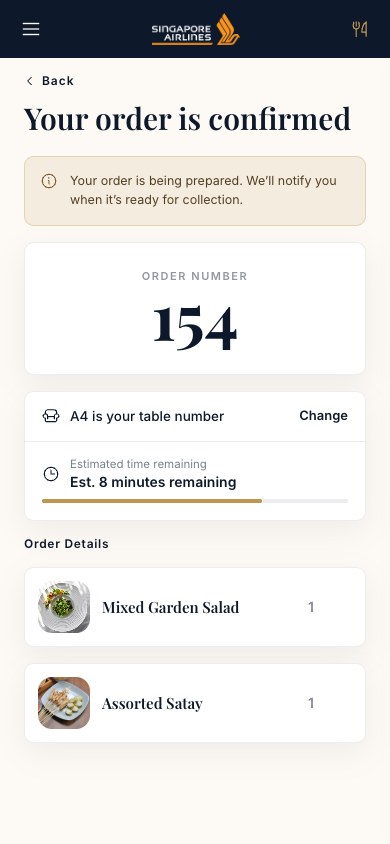
  2. The order number saves to the browser via cookie. Reopening the url on the same device picks the visitor's active order. A manual order number entry screen stayed in as a fallback.

Since the sessions ran remotely, we ran the prototype Wizard of Oz style, manually updating order confirmations and status screens behind the scenes to match each participant's actual choices. Seeing their own order on screen kept the session feeling real.

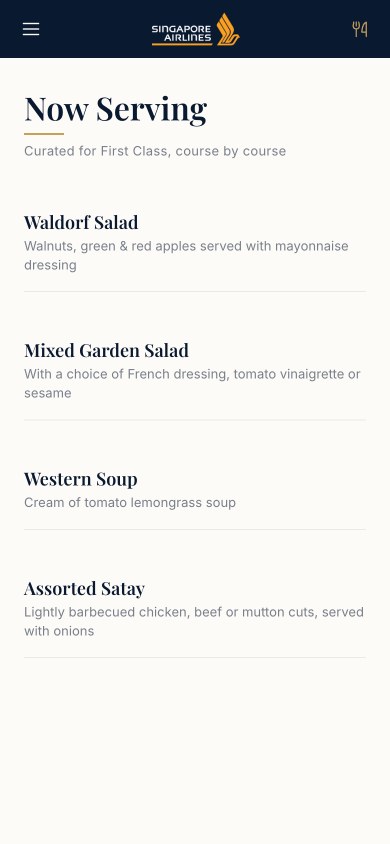
Now Serving

The finished experience lets you browse what's available, order to your table, and track your meal from confirmation through to collection, without touching a shared surface or shared utensils. It's built as a responsive, mobile-first layout.

Right feature, safer lounge

Shipped during Covid-19, the digital menu reduced the risk of virus exposure while dining at the lounge, letting visitors get their food without touching the shared menu, utensils, or serving area the original buffet used.

90%

of lounge visitors who ordered food or drink used the digital menu.

4.6/5

average satisfaction rating across the feedback module, after the solution had run for over 1 year.

Beyond the guest-facing app, I also designed the staff-facing systems the digital menu depended on to actually run: an order management system, server dashboard, customer feedback module, and menu management. The guest ordering flow was the visible layer, these were what made it operable at the lounge. The feedback module routed input across different aspects of the lounge experience to the relevant teams.

What this taught me

Redesigning a premium experience lounge guests were already used to, while meeting the safety needs Covid introduced, was the real challenge.

Most of this happened without access to the lounge itself, which reinforced how much can still be learned through focused conversations with the people who work in a space every day, even without observing it directly.

Covid ended before this reached a v2, so the rollout was eventually retired from the main lounge area. The system stayed in use in a smaller, more premium section, though. The contactless convenience it was built for turned out to be worth keeping once the original safety need had passed.